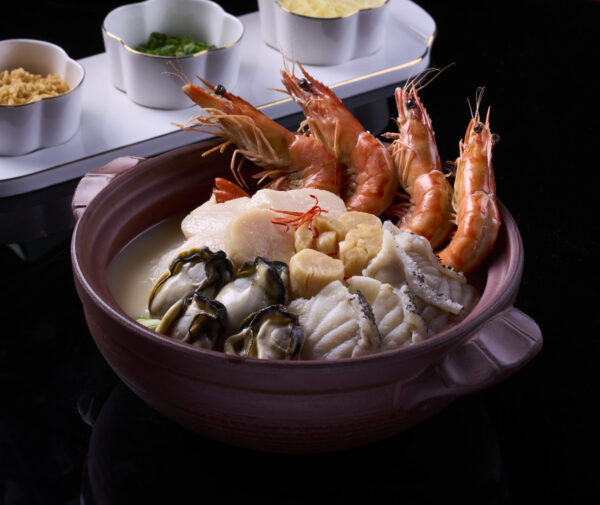
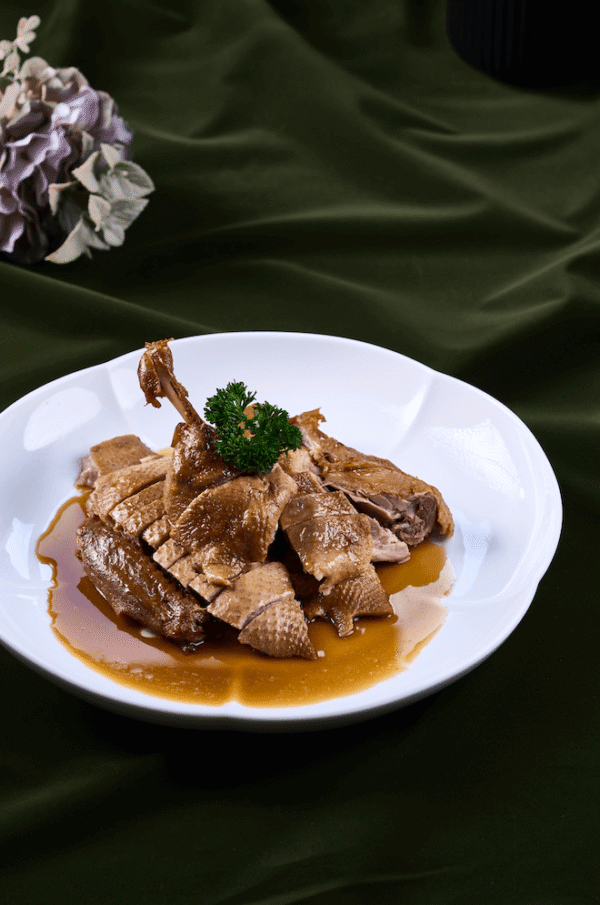
Most couples planning a Chinese wedding banquet in Singapore default to a hotel without giving it too much thought. The familiarity is understandable—hotels are reliable, well-staffed, and carry a certain cachet that families tend to appreciate. But reliability and the best possible experience are not always the same thing. A Chinese restaurant, one that has spent years perfecting the food and service that a banquet requires, often delivers an evening that a hotel ballroom simply cannot match. We list 10 reasons why.
Read: What to Look for in a Singapore Wedding Venue, From Capacity to Cuisine
1. The kitchen is built specifically for Chinese banquet cooking
A Chinese restaurant’s kitchen is designed, staffed and equipped to produce exactly the food a wedding banquet requires. The woks are the right size, the chefs know how to execute a whole steamed fish or a braised abalone at scale without compromising quality, and the timing of a multi-course service is second nature to the team. At a hotel, it’s possible the kitchen is handling several events simultaneously. On the other hand, at a Chinese restaurant, your banquet is the kitchen’s primary focus for the evening, and the food arrives accordingly.
2. The menu carries genuine cultural and symbolic meaning
Every course in a traditional Chinese wedding banquet is chosen for a reason. Whole fish symbolises abundance, noodles represent longevity, and a dish featuring prawns (har in Cantonese, which sounds like laughter) is believed to bring joy to the marriage. A restaurant rooted in Chinese culinary tradition understands this symbolism and can guide couples through menu selections that honour it. This is harder to replicate in venues where Chinese banquet food is one option among many, and where the kitchen may not have the depth of knowledge to advise meaningfully.
3. You can customise the menu to reflect your dialect group’s traditions
Chinese culinary traditions in Singapore vary considerably across dialect groups. While Teochew families can’t do without steamed fish and yam paste dessert (orh nee), Cantonese banquets typically feature more seafood and double-boiled soups. Meanwhile, Hokkien celebrations often include lor mee or a braised pork dish as part of the spread. A good Chinese restaurant can accommodate these differences thoughtfully and work with the couple and their families to build a menu that feels personally meaningful rather than generic. That level of customisation is where a specialist venue consistently outperforms a generalist one.
4. The setting supports the yam seng toast naturally
The yam seng, where the couple invites guests to raise their glasses and sustain a long, collective cheer, is one of the most raucous and joyful moments of any Chinese wedding banquet. It works best in a room that is already warm, close and full of energy. With the round-table layout supporting lazy Susans and circulating shared dishes, Chinese restaurants create exactly that kind of convivial atmosphere. A large, high-ceilinged hotel ballroom can sometimes diffuse the energy of the room, but a well-proportioned restaurant keeps it concentrated and lively.
5. Tasting sessions are easier to arrange and more meaningful
Most Chinese restaurants that host wedding banquets will offer a tasting session for couples booking above a certain number of tables, allowing you to eat through the proposed menu before committing. Because the restaurant’s regular menu overlaps significantly with its banquet offerings, the tasting reflects the actual quality of what guests will receive on the night. You are not eating a specially prepared sample that may differ from large-scale execution. What you taste is, in most cases, a reliable indicator of what will land on the tables at your wedding.
Thinking ahead to the rehearsal dinner? We have a guide for that.
6. The round-table format also suits large multi-generational guest lists
Chinese wedding banquets in Singapore often bring together three or four generations of family under one roof, from young children to elderly grandparents who may not see each other often. The round-table format is particularly well-suited to this kind of gathering. Every seat at the table has equal access to shared dishes, conversation flows more naturally than it does across rectangular arrangements, and the lazy Susan ensures that no one has to reach awkwardly across the table. It is an arrangement that has endured precisely because it works.
7. Ang bao rates tend to be more manageable for guests
In Singapore, the ang bao (red packet) amount a guest gives is typically calculated to cover the cost of their seat at the banquet, and guests are generally aware of this. Venue prestige plays a significant role in determining the expected amount (there are even guides online to advise on this). Wedding banquets at luxury hotels can carry ang bao expectations of $200 to $400 per guest, which places a quiet financial burden on those invited. A Chinese restaurant, particularly one with a strong reputation but without the hotel premium, tends to bring that figure down to a more comfortable range, in a way making the invitation easier for guests to accept.
8. The intimacy of the space encourages guests to stay longer
One practical difference between a hotel ballroom and a Chinese restaurant is the sense of enclosure. Restaurants are typically configured to seat 50 to 100 guests across multiple rounds of tables in a room where the noise, laughter and warmth of the occasion build naturally over the course of the evening. Guests tend to linger, and the couple has more opportunity for genuine interaction with each table. Ballrooms, particularly large ones, can feel diffuse by comparison, with the risk of guests at far tables feeling disconnected from the proceedings closer to the stage.
9. Décor and logistics are simpler to coordinate
Chinese restaurants that regularly host banquets come with a baseline of décor that is already appropriate for the occasion. This means without having to factor in additional costs, you can reasonably expect warm lighting, red and gold accents and traditional motifs that complement the cultural tone of the evening. Couples can enhance this with florals, customised signage and table centrepieces without having to build an entire visual environment from scratch, as is sometimes necessary in neutral hotel spaces. The practical logistics, from seating the ang bao table near the entrance to arranging the couple’s table at the front, are also handled efficiently by staff who have done it many times before.
10. A restaurant that knows its craft makes the evening feel effortless
There is a particular ease that comes from working with a team for whom a wedding banquet is familiar territory. The servers know the rhythm of a ten-course service. The kitchen understands how to pace each dish so that guests are not waiting too long or eating too quickly. Even seemingly tiny details, such as ensuring the whole fish is presented intact before being portioned, or that the dessert arrives at the right moment, are handled without the couple needing to manage them. On a night when there is already a great deal to attend to, that kind of unwavering competence takes one thing off a very long list.
The right restaurant makes the planning process smoother and the evening itself far more enjoyable for everyone at the table, couple included. If Fu Yuan Teochew Dining sounds like the right fit for your banquet, reach out to us to begin the conversation. We look forward to being part of your evening.