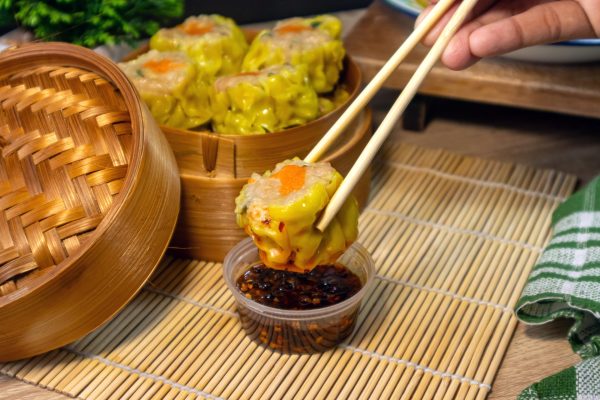
Singapore takes its dim sum seriously, and rightly so. On any given weekend morning, families are already queuing before the doors open, toddlers in tow and grandparents leading the charge. The food is only part of the equation. How you order, how you pour the tea, and how you conduct yourself at the table all shape the experience. Get those right, and a dim sum sitting becomes one of the most satisfying meals this city has to offer.
These 10 tips will help you do exactly that.
1. Arrive earlier rather than later
Dim sum is traditionally a morning and early afternoon affair, and the kitchen adheres to that. The first sittings of the day are when the har gow wrappers have the most give, the char siew bao are freshest from the oven, and the cheung fun has not had time to firm up. In Singapore, popular restaurants fill up quickly on weekends, which means walk-ins after 10am at a well-regarded spot are often met with a significant wait. Book ahead, arrive on time, and the best of the menu is yours.
Fu Yuan Teochew Dining is one of the few places in Singapore where you can enjoy dim sum through lunch. Discover the menu here.
2. Choose your tea before you order your food
In most dim sum restaurants, the server’s first question will be about tea, and it is worth having an answer ready. Pu-erh is earthy and cuts through fatty, fried dishes particularly well. Jasmine is lighter, making it a good companion for steamed items. You also have chrysanthemum, subtly sweet and perfect alongside congee or lighter fare. The tradition of yum cha, or “drinking tea”, pre-dates the dumplings by centuries, and the tea you choose genuinely affects how the rest of the meal tastes.
3. Pour tea for others at the table before filling your own cup
This is standard practice at any Chinese dining table, and dim sum is no exception. Pour for your elders and guests first, working around the table before you attend to your own cup. If someone pours yours, tap two fingers gently on the table in acknowledgement. This is a gesture that stands in for a small bow or thank-you, with the custom widely recognised in Cantonese tea culture—though in Singapore it appears more sporadically. Skipping it is not a grave offence but observing it signals that you are paying attention to more than just the food.
4. Order a balanced mix of steamed, fried and baked items
A table of only steamed dishes is a missed opportunity, and an entirely fried spread becomes heavy quickly. The most satisfying dim sum meals tend to mix cooking methods throughout: xiao long bao and siew mai alongside dan tat (egg tarts), perhaps a plate of cheung fun, and a baked char siew bao or two. The contrast keeps things interesting from the first basket to the last. Ordering in waves rather than all at once also means dishes arrive fresher, and you can adjust based on appetite as the sitting progresses.
5. Eat each dish as it arrives, while it is still hot
A har gow left to sit for ten minutes is a different dish entirely. The wrapper turns claggy, the filling tightens, and the thin skin that was satisfyingly taut when it arrived becomes difficult to lift cleanly with chopsticks. Fried items fare even worse as their crispness disappears fast. Pace your conversation around the food, not the other way around. When a basket lands on the table, attend to it promptly. The kitchen has done its part; the rest is up to you.
6. Rotate the lazy Susan clockwise, and never while someone is serving themselves
The rotating centrepiece at a round Chinese dining table is a lazy Susan, and it comes with a few unspoken rules worth knowing. Always spin it clockwise, and always slowly. Before rotating, check that no one has their chopsticks extended towards a dish or their teacup resting close to the edge—a sudden spin can send both flying. It sounds like a small thing, but knocking someone’s tea across the table mid-conversation is exactly the kind of disruption that a smooth, enjoyable dim sum sitting does not need.
7. Use the serving chopsticks or spoons provided
Most dim sum restaurants place dedicated serving utensils alongside shared dishes, and using them is both hygienic and courteous. If a separate pair is not provided, one alternative is to use the clean, unused end of your personal chopsticks when transferring food to someone else’s plate. Reaching directly into a shared basket with chopsticks that have already been in your mouth is generally frowned upon unless you’re dining with close family or a very familiar group.
Learn more dim sum etiquette—including what the size of your bites should be.
8. Signal for a tea refill without interrupting the conversation
There is a practical, wordless system for this that has been used in dim sum restaurants for as long as most people can remember. When the teapot needs a refill, lift the lid and rest it at an angle against the handle or on the rim of the pot. An attentive server will spot it and bring hot water without being flagged down. This tip is especially useful when the table is full and everyone is talking at once.
9. Offer the last piece to someone else before taking it yourself
Taking the final item from a shared dish without a word is considered poor form at a Chinese dining table. A brief gesture suffices, such as turning the plate towards a tablemate, or simply asking if anyone wants it before you reach for it. The person you offer it to will almost always decline, and the piece is yours to take. But the act of asking is what counts. Dim sum is a communal meal by design, and small courtesies like this one reflect that in a way that everyone at the table registers, even if no one says so.
10. Save room for dessert, and order it earlier than you think
Dim sum desserts do not follow a strict sequence. They can be ordered and eaten at any point, and many seasoned diners put in a dessert order early to avoid disappointment. Popular items like sesame balls can sell out well before the kitchen closes for the afternoon. A chilled mango pudding or a bowl of beancurd (tau huay) makes for a clean, refreshing close to a full sitting. Do not leave it as a last-minute decision or you may find the best options have already gone.
The Craft Behind the Basket
The silky rice noodle sheets used in cheung fun are steamed to order in many traditional kitchens, one thin layer at a time on cloth-lined trays. This is a process that takes skill to get right and is one of the first things to suffer when a kitchen is rushed. At Fu Yuan Teochew Dining, that care is visible in every order that leaves the kitchen, and we do it with pride and consistency. Exclusively for lunch, we invite you to make a reservation at our Greenwood or Clarke Quay locations and come with a good appetite.