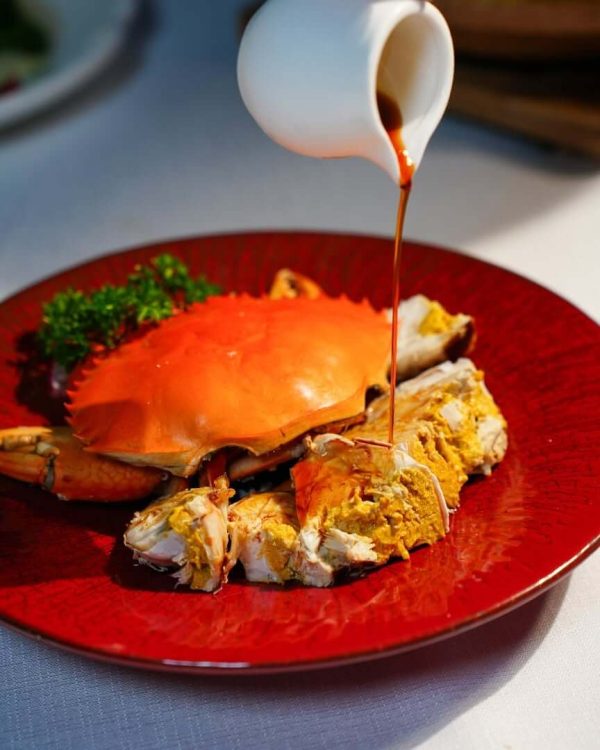
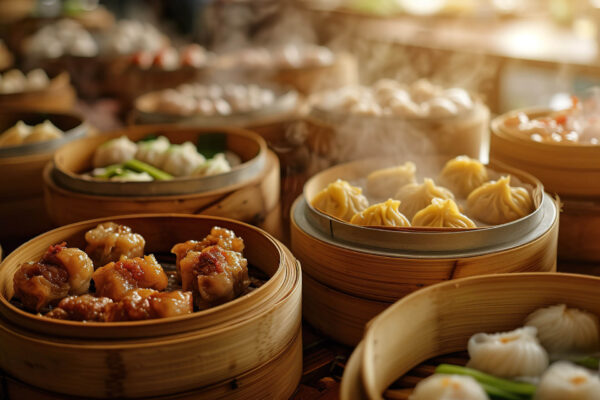
Walk into Fu Yuan Teochew Dining and you’ll notice something’s different. Sure, the dishes are beautiful—clean lines, smart plating, elegant touches—but there’s an older story behind them. A story that starts with the pantry.
Teochew food doesn’t try to dazzle with innumerable elements. Rather, it’s soft-spoken and honest. But beneath that quiet surface, you find flavour that persists. And that’s thanks to a handful of ingredients that show up again and again. Some are salty, some are sour. Others, whether fermented, dried, brined, or ground, can’t quite be explained until you’ve tasted them.
Let’s open the kitchen door and take a peek at the essentials. Some of these might already live in your cupboard. Others might surprise you.
Five Spice Powder
This isn’t your generic supermarket five-spice. No two households do it exactly the same way. The mix usually includes star anise, cloves, fennel, cinnamon (cassia), and Sichuan peppercorn. But the ratios? That’s up to the cook.
In Teochew dishes, this spice doesn’t punch you in the face. It lingers, gently. Braised duck, pork trotters, and soy-braised eggs get that earthy depth from this blend. The aroma alone is a memory. Grandparents’ simmering dinner. A pot bubbling gently for hours. You taste it before the first bite.
Salted Mustard Greens
You’ll smell this one before you see it.
Salted mustard greens, or haam choy, are a staple. Vegetables, brined and left to ferment until they’ve turned into something sharp and savoury. Just the thing to wake up a simple soup and whet the appetite.
You’ll find them in a clear broth with pork ribs or duck. The flavour cuts through richness. It doesn’t overpower, but lifts. Some home cooks chop it up and fry it with garlic and minced meat. It’s humble fare, but it disappears fast.
Fermented Black Soybeans
They look like little black beads. Soft, wrinkled, and maybe a bit sticky.
But one spoonful changes everything. Fermented soybeans bring a salty funk to the table, described as somewhere between miso and blue cheese, but distinctly Teochew.
Steam a fish with ginger, garlic, and a sprinkle of these, and you don’t need anything else. Fry them up with bitter gourd or eggplant. Just a few add that deep, unmistakable flavour that feels rooted and familiar. Like you’re tasting, simultaneously, home and age-old history.
Dried Sole Powder
Blink and you’ll miss it. But once you know, you know.
Sole is dried, roasted, and ground into a fine powder. Teochew cooks use it sparingly, almost like a secret weapon. You stir it into porridge. You sneak it into fish cakes. A dash into a soup, and suddenly, it tastes like it came from a restaurant.
It doesn’t announce itself. But take it away and everything tastes flatter. That’s the magic.
Preserved Olives (Olive Vegetable)
Don’t think Mediterranean. These aren’t the olives you’re used to.
Teochew preserved olives are pickled in soy sauce and oil until they’re dark, shiny, and soft. They’re salty, sweet, and intense. Some say it’s too much, but there will be others who eat it straight from the jar with rice.
One of the most common ways to enjoy them? With plain porridge. Just a small blob on the side. Simple, comforting, unforgettable.
Plum Sauce
Sure, it works with a duck. Many of us know that. But in a Chinese pantry, plum sauce does more than dip.
It’s thick, sweet-sour, and quietly versatile. A dash can turn shredded chicken into a cold salad. Stir it into a stir-fry for a touch of tang. Some home cooks even mix it into noodles.
It’s the sauce that never complains. Just does its job and makes things better.
Fish Sauce
Not all fish sauces are the same. Teochew-style fish sauce is lighter, a little more mellow. Still delicately fishy and umami-rich, but it plays well with others.
You won’t always see it poured on top. Often, it’s hiding in the background—seasoning stir-fries, soups, and sauces. It blends and enhances. Sometimes, you barely notice it. Other times, you realise it’s what made the whole thing sing.
It’s like a supporting actor with incredible timing. Doesn’t steal the scene but holds it all together.
Rock Sugar
It’s slow. That’s the point.
Rock sugar doesn’t dissolve fast, which makes it perfect for dishes that need to simmer. Teochew cooks use it in soy-based braises and herbal soups. It gives a smooth, rounded sweetness that regular sugar can’t.
You’ll also find it in classic desserts like snow fungus, longan, red dates. It’s not sugary in an aggressive way. It’s gentle, and offers more of a hum than a buzz.
Preserved Radish
There’s nothing glamorous about preserved radish, but it sticks around because it delivers.
Fried with egg. Tossed into noodles. Tucked into steamed cakes. Preserved radish brings texture and a concentrated burst of saltiness and/or sweetness. It also provides a satisfying chew that balances soft or creamy dishes.
The sweet version’s great with omelettes. The dry one? Use it in porridge or dumplings. It’s the kind of ingredient you don’t notice at first, but halfway through the dish, you’re hunting for more.
Shallot Oil
Here’s a secret: you could make the simplest dish—such as a bowl of rice or plain noodles—and pour shallot oil on top. That’s it, done.
Sliced or chopped shallots are slow-fried until golden and crispy. The leftover oil is strained, bottled, and kept nearby. Just a drizzle turns bland into beautiful. Add it to tofu, veggies, even cold meats.
Many Teochew households keep a bottle on hand for everyday cooking.
Why the Pantry Still Matters
It’s easy to get swept up in sauces and garnishes. But real Teochew food comes from ingredients that have been trusted for generations.
Some are strong, while others are subtle. A few, like fermented beans or dried fish, may take time to appreciate. But they’re the backbone of dishes that feel balanced, clean, and satisfying.
And while restaurants like Fu Yuan Teochew Dining continue to explore new ways of presenting these dishes, adding finesse, precision, or elegance, the heart of each meal still starts here. On a pantry shelf. In a jar. In a scoop of oil. Quiet, unassuming, and unshakable.
So the next time you enjoy a Teochew meal that feels effortless, remember: it wasn’t. It was built on ingredients with stories longer than their labels.
From pantry to plate, experience Teochew culinary tradition at Fu Yuan Teochew Dining, 3A River Valley Road #01-01C/01D Clarke Quay Singapore 179020.