For many couples in Singapore, the solemnisation is the most meaningful 10 minutes of the entire wedding journey. It is the moment that makes the marriage legal, and it also happens to be the one that everything else is planned around. But getting to that moment involves several steps that need to happen in the right sequence and within specific timeframes.
If you are starting to plan your solemnisation and are not sure where to begin, this guide walks you through it from start to finish.
All You Need to Know About Wedding Solemnisation in Singapore
What Is a Solemnisation?
The solemnisation ceremony is the legal act that makes your marriage official under Singapore law. It is officiated by a licensed solemniser who verifies the required documents, confirms that both parties are entering the marriage willingly, and oversees the signing of the marriage certificate. Contrary to popular belief, no religious ceremony, betrothal celebration or wedding reception carries legal weight on its own. The solemnisation (as well as the registration and the certificate of marriage that follows it) is what the law recognises.
It is worth noting that solemnisation is distinct from your wedding reception or banquet. Many couples in Singapore choose to hold both on the same day out of convenience, preference or tradition, combining the ceremony with a family lunch or dinner immediately after. Others prefer a quiet, private solemnisation with immediate loved ones, followed by a larger celebration with guests at a later date. Both approaches are common and entirely acceptable.
1. Check That You Meet the Legal Requirements
Before anything else is set in motion, both parties must be eligible to marry under the Women’s Charter. Enacted in 1961, this Act governs civil marriage and broader family law matters in Singapore.
Both individuals must be at least 21 years of age at the point of solemnisation. If either party is between 18 and 20 years old, written parental or guardian consent is required. Singapore law recognises only monogamous marriages, so neither party can currently be married to someone else. The couple must also not be closely related by blood or adoption.
For couples where both parties are Singapore citizens or permanent residents, the process tends to be fairly smooth from the outset. Where one or both parties are foreign nationals or hold certain pass types, however, additional requirements may come into play. The Registry of Marriages is the most reliable place to check what applies to your situation. Do so early on to avoid any surprises once the planning is already underway.
2. Decide on Your Solemnisation Date and Venue
Before you submit your marriage application, you will need to have a clear sense of your intended solemnisation date and where the ceremony will take place, as both details are required in the application. Wedding venues in Singapore range from the Registry of Marriages itself to private homes, restaurants, outdoor gardens and hotel spaces. Thus, it’s advisable to secure a shortlisted solemnisation venue before you begin the paperwork.
Popular dates, particularly those falling on weekends or auspicious calendar days, tend to be claimed very quickly. If your heart is set on a specific date, you might want to work backwards from that date to meet the application timeline. It’s a more practical approach that helps you lock in your preferred date early and avoid the stress of limited availability.
3. Engage a Licensed Solemniser (If Solemnising Outside ROM)
If you plan to hold your solemnisation ceremony at the Registry of Marriages (ROM), a solemniser will be assigned to you and no additional engagement is necessary. However, if you are solemnising at an external venue, you will need to source and confirm a licensed solemniser independently before submitting your marriage application. Note that their signed consent is required as part of the process.
The ROM maintains a directory of approved solemnisers, which includes justices of the peace, religious leaders and grassroots leaders. It is generally recommended to approach your preferred solemniser three to four months in advance, as those available on weekends or public holidays are often booked up well ahead (if your preferred date falls on a Saturday with an auspicious number, add an extra month to that timeline for good measure). Once your solemniser has agreed to officiate and provided their consent, you can proceed to file your application.
4. Submit Your Marriage Application
The marriage application, also known as the Notice of Marriage, is submitted online through the Our Marriage Journey (OMJ) portal at marriage.gov.sg. Couples with Singpass can use it to pre-fill much of the application. The notice is a formal, legal declaration of your intent to marry and must be submitted at least 21 days before your intended solemnisation date. This mandatory notice period also allows time for any valid objection to the marriage to be raised.
You have up to six months to submit your application before your solemnisation date, and it is usually better to do so as early as possible, particularly if you are coordinating an external venue and solemniser. The application fee is S$42 for couples where at least one party is a Singapore citizen or permanent resident, and S$380 if both parties are foreign nationals.
5. Make Your Declarations
After submitting the marriage application, both parties must make a statutory declaration confirming their intent to marry. Depending on eligibility, this can be completed online via the Singpass app, via video link or in person at ROM. Where an in-person or video-link appointment is required, ROM will schedule this and provide the relevant details through the OMJ dashboard.
The marriage licence will be issued after the minimum 21-day notice period has been fulfilled and within 30 days before your solemnisation date. To ensure sufficient processing time, it is recommended that declarations be completed at least 10 days before the ceremony.
6. Confirm Your Two Witnesses
Two witnesses must be present at every solemnisation ceremony in Singapore. Any individual aged 21 and above qualifies regardless of nationality. This role can be filled by family members or close friends. Your witnesses will need to provide their personal particulars for the marriage application and bring their original identification documents (NRIC for Singapore citizens and permanent residents, or passport for foreign nationals) to the ceremony on the day.
If you are still deciding who to ask, it is a good idea to confirm your two witnesses well in advance of the ceremony, as their details are needed as part of the marriage application itself.
7. Prepare Your Documents
In the lead-up to your solemnisation, it pays to get your documents in order early rather than scrambling for them the night before. Both parties and their two witnesses will need to present their original NRIC or passport on the day. For solemnisations held outside of ROM, check with your solemniser on any additional paperwork that needs to accompany you to the venue, as requirements can vary depending on your circumstances.
One step that is easy to overlook: once your marriage licence has been issued, the OMJ portal allows you to download a preview of your ceremonial certificate. Share this with your solemniser ahead of the ceremony so that any issues can be caught and resolved well before the day itself.
8. The Solemnisation Ceremony
The solemnisation ceremony itself is typically brief, usually between 15 and 30 minutes when held at an external venue, and closer to five minutes when conducted at ROM. The solemniser will verify the identification of both parties and their two witnesses, confirm that both are entering the marriage freely and willingly, and guide the couple through their vows. Rings may be exchanged at this point, though optional. The couple, their witnesses and the solemniser then sign the marriage certificate (see the next section for ceremonial vs legal certificate), and the marriage is formally pronounced.
It is a short ceremony by any measure, but the people in the room tend to feel the significance of it regardless. Keeping it unhurried, and resisting the urge to rush straight into the next item on the programme, gives the moment the space it deserves.
9. Receive Your Certificate of Marriage
Once the marriage has been solemnised and processed, a digital certificate of marriage will be issued and available for download from your OMJ dashboard. This is the legal proof of your marriage in Singapore, and a physical copy can be requested through ROM if you need one for official purposes.
Note: The ceremonial certificate is a separate thing entirely—the decorative version that gets signed by everyone on the day. This one needs to be downloaded from the OMJ portal and printed before the solemnisation. You can print it on coloured or patterned A4 paper, which is a nice touch, though the design should still look the part. Share a preview with your solemniser ahead of time as well since they do have the right to decline signing if they feel the certificate is not appropriate for the occasion. When in doubt, err on the side of elegant over creative.
A Few Practical Reminders
Send your invitation cards out with sufficient notice, particularly if guests are travelling or need to arrange leave. For a weekend solemnisation, six to eight weeks’ notice to guests is a reasonable minimum.
Reconfirm all arrangements with your solemniser at least a week before the ceremony. Reach out again a few days prior to ensure everything remains on track. Small details, such as ensuring a clean signing table is set up and that witness seating is ready, make a noticeable difference to how smoothly the ceremony runs.
Most importantly, remember that while the administrative steps require attention, the solemnisation ceremony at the heart of it all is a moment worth being fully present for. The process exists to protect your marriage. The ceremony is where it begins.
A Solemnisation and Memorable Dining Experience In One

With the legal requirements understood and the process mapped out, what remains is the celebration itself. For many couples in Singapore, that means gathering family and loved ones around a table for a meal that marks the beginning of a new chapter together.
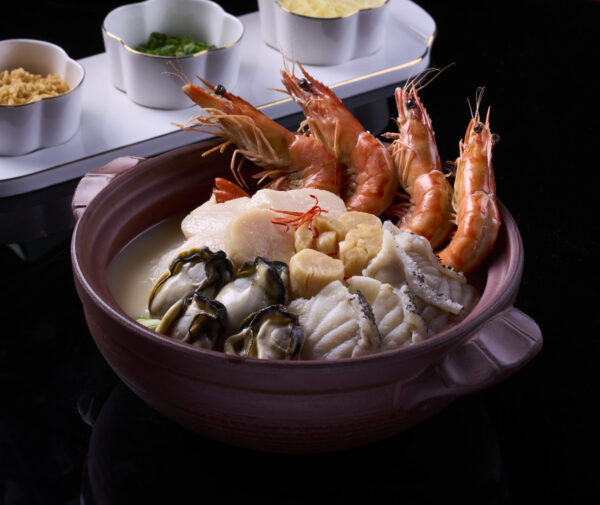
Fu Yuan Teochew Dining offers a setting and a dining experience well suited to exactly that kind of ceremony. With private dining spaces available for an intimate solemnisation, a celebratory meal with family immediately after, and full banquet facilities for the wedding reception itself, we offer a place that can hold the whole occasion without anyone having to travel between venues. With a menu rooted in Teochew culinary tradition, the food speaks naturally to multi-generational families who appreciate cooking that is honest, refined and deeply familiar.
Get in touch to start planning your solemnisation celebration today.